
[ SYSAIQ—WORK / TRADING ]
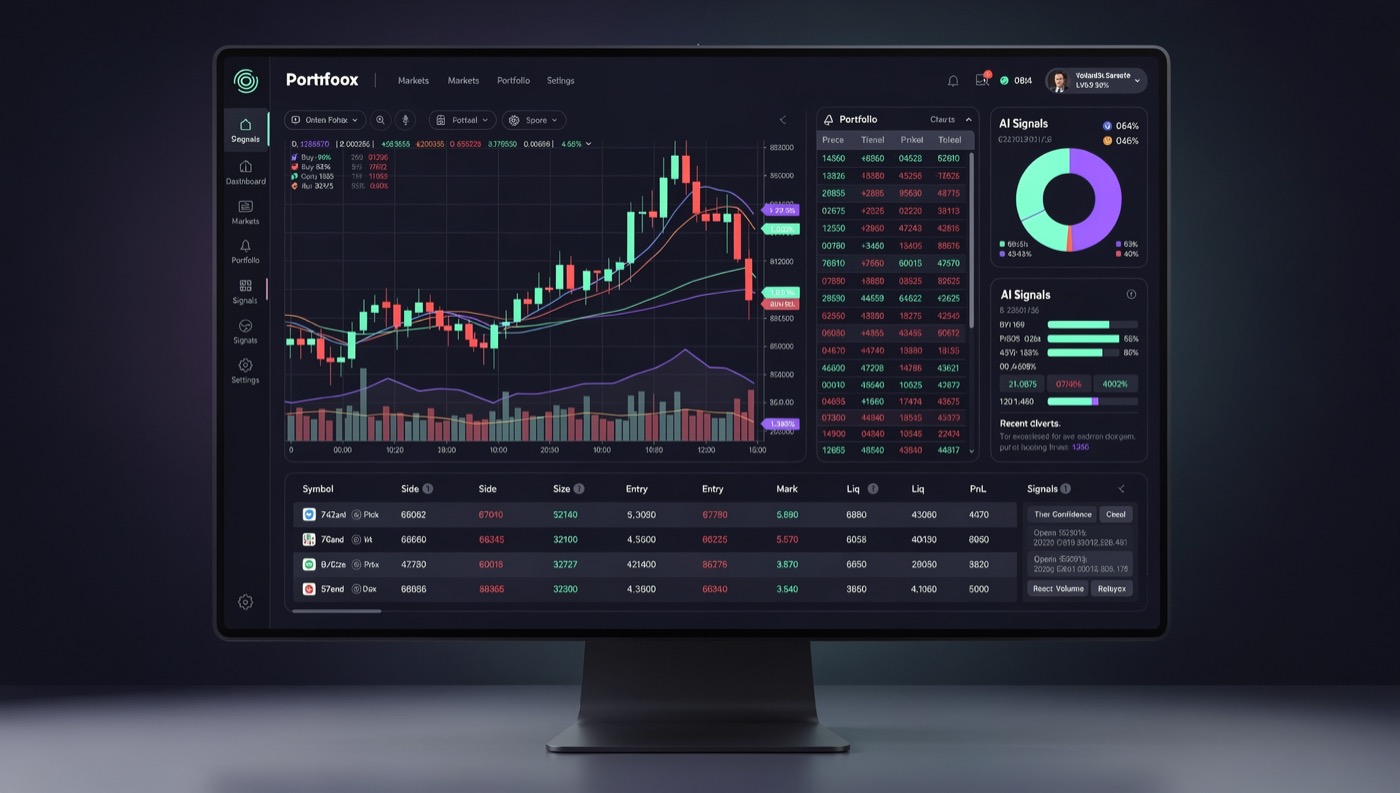
Trading Analysis Terminal
Charts, order book, backtesting and risk limits in one engineered workspace.
- Category
- Finance & trading
- Related service
- Trading analysis software
- Target industries
- 4 industries
Overview
A unified crypto and forex terminal that brings live charting, order-book depth, positions across several venues, portfolio analytics and a backtesting studio into one workspace. It is a software-engineering project: the terminal organises the trader's own data and rules, tests a strategy on historical data before it goes live and enforces the risk limits the trader has set.
PROBLEM
The problem
A trader who works across an exchange and a broker usually keeps five tabs open: one for the chart, one for the book, one for each account and a spreadsheet for risk. Strategy rules live in a notebook, backtests live in Excel with look-ahead bias, and the risk check happens after the order.
- Positions and exposure are stitched together mentally across venues.
- A strategy idea cannot be tested reproducibly before capital touches it.
- Limits on size and daily loss are a personal promise, not a system rule.
SOLUTION
The solution
SysaiQ engineered the terminal as a data pipeline, a rules engine and a set of views on top of them. Market data from each connected venue is normalised into one store; positions, balances and exposure are aggregated into a single book.
- A backtesting engine replays any rule set over historical candles with fees, slippage and no look-ahead, and produces an equity curve and drawdown report that can be re-run identically.
- Per-strategy limits on leverage, position size and daily drawdown live in the order ticket; an order that would breach them is blocked or warned before it is sent.
- The chart workspace, depth ladder and portfolio analytics read the same normalised data, so what is on screen is what the engine computed.
The terminal does not generate trade recommendations and does not manage assets; the strategy, the decision and the risk remain the trader's.
OUTCOME
The outcome
The trader now works from one book instead of five tabs. A strategy is written as testable code, replayed on history the same way every time and only then switched on. Risk limits are enforced by the system at the moment an order is placed rather than reviewed in a spreadsheet afterwards. Everything here is software engineering: the terminal organises data and enforces the trader's own rules, and makes no promise about market outcomes.
What makes it different
Capabilities you won't usually find in similar products
Reproducible backtesting
Any rule set is replayed over historical candles with fees, slippage and no look-ahead; the equity curve and drawdown report come out identical on every run.
One book across venues
Positions, balances and exposure from several exchanges and brokers are normalised into a single view with unified P&L.
Pre-trade risk limits
Per-strategy limits on leverage, size and daily drawdown are checked in the order ticket; a breaching order is blocked or warned before it is sent.
Strategy as code
Rules that used to live in a notebook become documented, versioned, testable code that the engine and the live ticket both read.
Pages and screens
- [ 01 ]Chart WorkspaceMulti-pane candlestick charts with drawing tools and layered indicators synced to live price.
- [ 02 ]Order Book and TicketDepth-of-market ladder with an order ticket wired to the risk checks.
- [ 03 ]Portfolio AnalyticsUnified P&L, exposure and risk metrics across all connected venues, by strategy and asset.
- [ 04 ]Backtesting StudioReplay a strategy over history and read the equity curve and drawdown before it goes live.
- [ 05 ]Risk LimitsPer-strategy leverage, size and daily-loss limits, with the log of every blocked or warned order.
Gallery
Select an image to enlarge it.
-
Chart workspace, depth ladder and portfolio view
Technical approach
- Python data pipeline and backtesting engine: venue feeds are normalised into one candle and fill format; replays account for fees and slippage and are deterministic, so a report can be reproduced exactly.
- Node.js / Express API serving the normalised data, the aggregated book and the risk-check endpoint used by the order ticket.
- SQLite / SQL for candles, fills, positions and strategy runs, with time-series indexes for chart and replay queries.
- Vanilla JavaScript front end: multi-pane candlestick charts drawn on canvas, the depth ladder and the portfolio views share one live feed.
- Risk limits are evaluated server-side before an order is forwarded to a venue; the terminal never holds exchange credentials in the browser.
Target industries
Related service
Related projects
Want something like this?
Write a few lines about your business and the problem you want solved; you receive a written proposal before any commitment.