
[ SYSAIQ—WORK / ECOMMERCE ]
E-commerce Store Admin
Run the whole store from one screen.
- Category
- Business systems
- Related service
- E-commerce
- Target industries
- 4 industries
- Languages
- فارسی · English
Overview
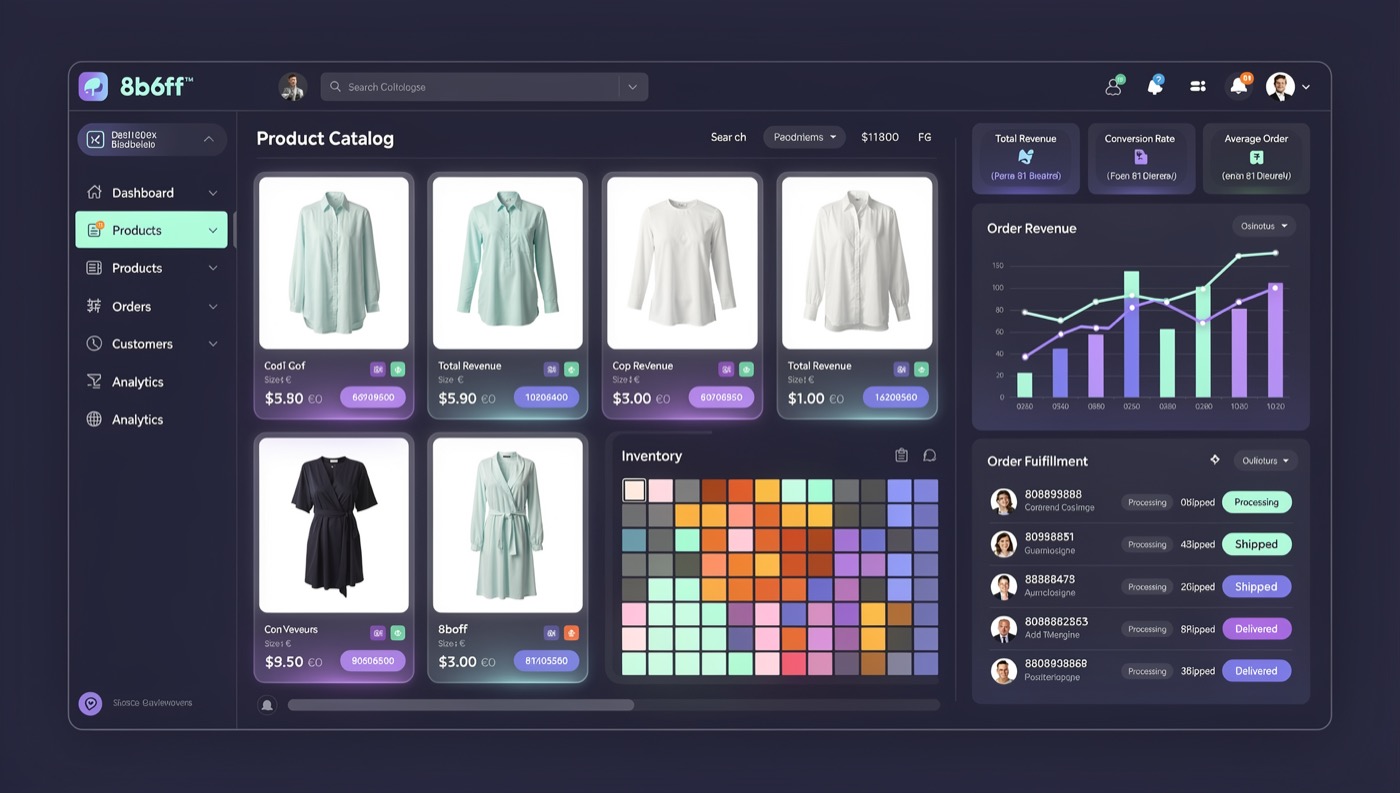
An admin platform for an online fashion store that brings the catalog, orders, inventory, campaigns and customers into one place. Instead of switching between a storefront back office, a stock spreadsheet and several marketing tools, the team works from one screen where the numbers are live and the items that need attention are raised automatically.
PROBLEM
The problem
An online fashion store usually runs on the storefront's own back office, a stock spreadsheet and separate tools for email and ads. Each one shows a different slice of the truth.
- A product reads as in stock while the sizes people actually buy are gone.
- Dashboards report gross sales, so a busy campaign can hide a thin margin.
- Building an audience for a campaign means stacking filters or exporting data.
- Risky or delayed orders surface weeks later as refunds and disputes.
SOLUTION
The solution
SysaiQ built the admin on one product and order model that every screen reads: the dashboard, catalog, inventory, fulfilment and campaigns all work from the same data.
- Stock is tracked per variant (size and colour) and per location; combinations that are low and selling fast light up on a heatmap before they run out.
- Revenue is computed per order net of discounts, returns and shipping, so each campaign is judged on margin rather than volume.
- A plain-language request such as "customers who bought twice but never came back" becomes a live segment that feeds a campaign directly.
- Every incoming order is scored for fraud and stock-delay risk, and problem orders rise to the top of the fulfilment queue.
OUTCOME
The outcome
The store is run from one admin instead of a back office, a spreadsheet and a row of marketing tabs. Size gaps are visible before they cost sales, campaigns are compared on what they actually earned, and the team builds an audience by describing it. Problem orders are handled at the front of the queue, not after a dispute arrives.
What makes it different
Capabilities you won't usually find in similar products
Size-curve inventory heatmap
Stock is read by size and colour, so a product that is technically in stock but gone in the sizes that sell is flagged before it quietly loses sales.
Margin-true revenue analytics
Discounts, returns and shipping are netted out per order, so a campaign that looked like a strong week is shown for what it really earned.
Segments in plain language
Describe an audience in a sentence and get a live customer segment that can be pushed straight into a campaign, with no filter stacking and no exports.
Fraud and delay radar
Each order is scored for fraud risk and stock-delay risk as it arrives, so problem orders rise to the top instead of returning later as a dispute.
Bulk catalog editing
Prices, variants and media across a whole collection are edited in one pass and published to the storefront together.
Pages and screens
- [ 01 ]Revenue DashboardNet revenue, orders, top movers and margin trend, with short AI notes on what changed and why.
- [ 02 ]Product CatalogEvery SKU with variants, pricing and media, with bulk editing by collection.
- [ 03 ]Inventory HeatmapStock by size and colour across locations, with low-and-selling combinations lit up before they run out.
- [ 04 ]Order FulfilmentA live queue from paid to shipped, risk-scored, with labels, refunds and status changes handled inline.
- [ 05 ]Campaigns and SegmentsBuild customer segments, launch campaigns and read each campaign's revenue net of discounts and returns.
Gallery
Select an image to enlarge it.
-
Product catalog, inventory heatmap, revenue and fulfilment queue (English UI) 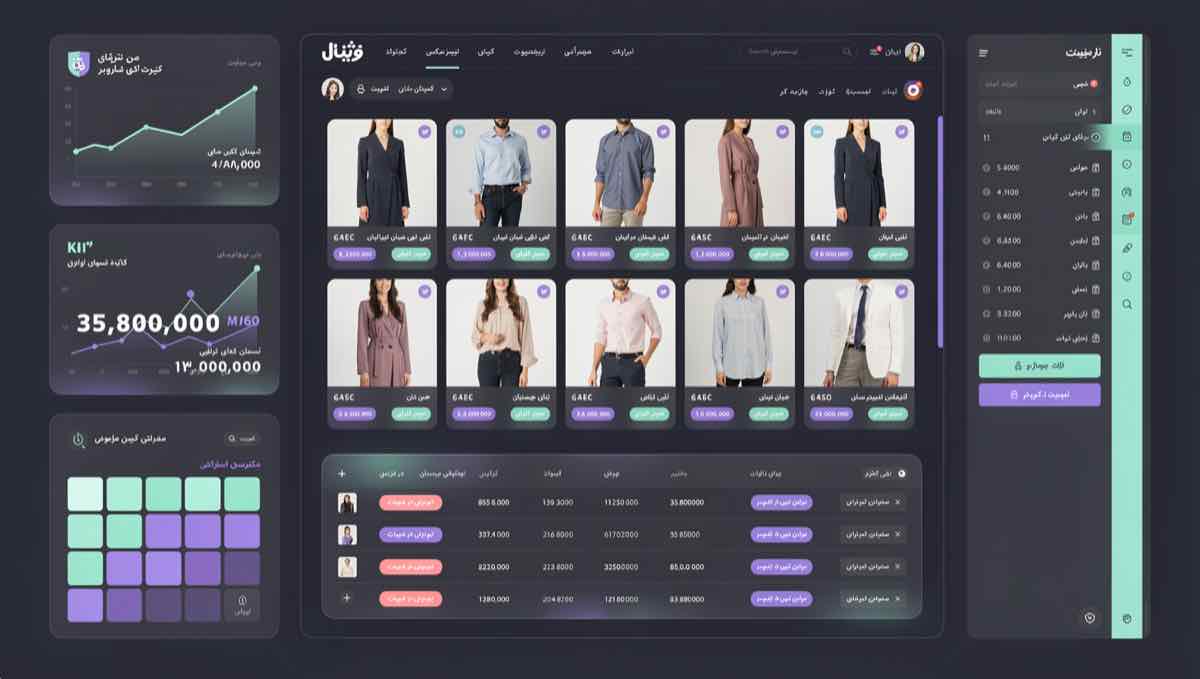
The same admin in the Persian UI
Technical approach
- Node.js / Express API with one product, variant and order model; every stock movement is recorded per variant and per location.
- SQLite schema for catalog, variants, orders, returns and campaigns; net revenue per order is computed in SQL from discounts, returns and shipping.
- Vanilla JavaScript admin: dashboard, inventory heatmap, fulfilment queue and campaign views in one application sharing a live data feed.
- OpenAI API turns a plain-language audience description into a structured filter that is validated and then run as a read-only query; it never writes to store data.
- Order risk scoring runs server-side on each new order from its own attributes and the customer's history.
Target industries
Related service
Related projects
Want something like this?
Write a few lines about your business and the problem you want solved; you receive a written proposal before any commitment.